









ABOUT THE GAME
Play first. Keep the details close.
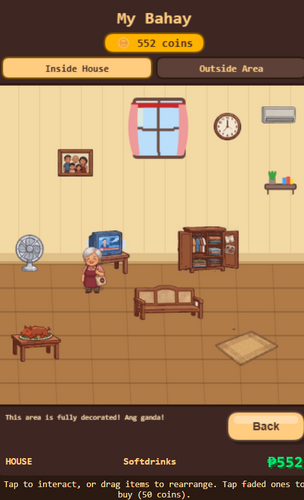
Inherit your grandmother's carinderia, travel across the Philippines, cook iconic regional dishes, and learn the cultural history behind each recipe.
QUICK FACTS
- Format
- Cultural cooking sim (proof of concept)
- Play now
- Free on itch.io
- Platforms
- HTML5 browser
- Status
- Proof of concept, updated 07.2025
GAME NOTES
Know the run before it starts.
Open the game
Click Play Now to load the game in the player.
Choose a region
Select a Philippine region and the dish you want to cook.
Cook and learn
Follow the recipe, talk to locals, and discover the cultural history behind each dish.
MORE FOR THIS GAME
Useful next reads.
Browser controls
Mouse-based interaction; click to select ingredients and navigate.
NOTE 02Cultural focus
The game emphasizes learning the history and origin of Filipino dishes, not just cooking speed.
NOTE 03Proof of concept
This is a proof-of-concept build; features are limited compared to a full commercial release.
About Lutong Bahay: Lola’s Home Cooking
Lutong Bahay: Lola’s Home Cooking is a Filipino cultural cooking game made by senshi.labs,
with the full team credited on the itch.io page. The premise is personal: you inherit your
grandmother’s carinderia, and the way to honor it is to travel across the Philippines, cook
iconic dishes from each region, and talk to the locals who know the stories behind the
recipes. The word lutong bahay itself means “home-cooked” in Tagalog — the kind of meal a
lola (grandmother) puts on the table without a recipe.
It is important to be honest about the release shape: senshi.labs describes this build as a
proof of concept, not a full commercial release. The first proof-of-concept build was
released on December 22, 2020, and a later updated build is dated July 25, 2025. Treat the
game as a focused, playable slice of a larger idea rather than a complete cooking campaign.
The browser build is free and runs entirely in HTML5 on itch.io. The page advertises a music
selection, a level-selection screen, and fun-fact and map visuals as part of the experience.
There are no advertised desktop or mobile downloads.
What makes Lutong Bahay different from the other cooking games on this site is the educational
core. Fishball, kuya! and Putahe ng Ina Mo: Sinigang Edition are about the physical act of
cooking fast. Lutong Bahay is about the dish itself — where it comes from, which region it
belongs to, and why it tastes the way it does.
How to Play
The browser build loads into a mouse-driven interface. The flow is:
- Choose a region. Pick a Philippine region from the level selection. Each region is
tied to a dish that is iconic there. - Pick a dish. Choose the recipe you want to cook for that region.
- Cook it. The cooking interaction is mouse-based: select ingredients, follow the
recipe steps, and assemble the dish. - Talk to locals. Conversations with the people you meet along the way explain the
historical and cultural origin of the recipe. - Read the fun facts. The game surfaces short cultural notes and map visuals tied to
the dish, so the cooking loop is always paired with a small piece of local history.
The pace is deliberate. This is not a time-management arcade game where customers stack up
behind you; it is a guided tour that happens to use cooking as its interaction. The point is
the dish and its story, not how fast you can plate it.
The music selection and level-selection screen mean you can jump between regions rather than
playing in a fixed order. If you have a favorite Filipino dish, you can start there.
The Setting
The Philippines is an archipelago of more than seven thousand islands, and each region has
its own culinary identity. Adobo varies from province to province. Sinigang tastes different
depending on which souring agent is used. A dish that is everyday in one place can be a
special-occasion meal in another.
Lutong Bahay takes that diversity as its whole premise. The framing story — inheriting
lola’s carinderia — is a device that lets the game move from one region to the next without
breaking the family-cooking feeling. You are not a professional chef on a TV show; you are a
grandchild trying to understand what the family carinderia actually served.
That framing is also why the proof-of-concept shape makes sense. Building a complete, fully
voiced, fully art-directed culinary tour of an entire country would be a huge project. What
senshi.labs has shipped is a taste of that tour: enough dishes, enough conversations, and
enough map and fun-fact material to show what the full version would feel like.
For a site built around Filipino everyday-life games, Lutong Bahay is the educational branch
of the food theme — it pairs naturally with the arcade cooking games on the same shelf.
Tips for New Players
- Read the cultural notes. The fun-fact and map visuals are not decoration; they are the
point of the game. Pause on them. - Cook with the story in mind. This is not a speed challenge. The recipe steps are there
to anchor the cultural explanation, not to test your reflexes. - Pick a dish you already know. If you have a favorite Filipino ulam, start there. The
cultural notes will land more strongly when you recognize the dish. - It is a proof of concept. Go in expecting a focused slice rather than a long campaign.
Features are limited compared to what a full commercial release would include. - Mouse only. The browser build is mouse-driven; click to select ingredients and navigate
the level-selection screen. - No mobile port advertised. The HTML5 build runs in the browser, but no native mobile or
desktop downloads are listed on the page. - It is genuinely free. The itch.io page lists the proof-of-concept build at no cost.
FAQ
Frequently asked before the first run.
Where can I play Lutong Bahay?+
Click Play Now above to load the game in the player.
Is it free?+
Yes, completely free.
What kind of game is it?+
A Filipino cultural cooking game. You inherit your grandmother's carinderia, travel across the Philippines, cook regional dishes, and learn their cultural history.
Is it a full release?+
No. The developer describes it as a proof of concept, originally released Dec 2020 with an updated build in July 2025.
What platforms?+
HTML5 browser only. No desktop or mobile builds were advertised.